
How to Read Food Labels in Australia: Nutrition Panels & Ingredients
Food labels can help you compare products and understand what you are actually buying. In Australia, packaged foods generally provide an ingredients list, a Nutrition Information Panel and allergen information, although some exemptions apply.
The front of the pack is designed to attract attention. For practical nutrition decisions, the most useful information is usually on the back or side of the package.

What should you look at first on a food label?
Start with the ingredients list and the Nutrition Information Panel. These two sections tell you what the product contains and how much energy, protein, fat, carbohydrate, sugars and sodium it provides.
Claims on the front such as “natural,” “light,” “high protein” or “no added sugar” can be useful, but they do not tell the whole story. Always check the details on the label.
How does the ingredients list work?
Ingredients are generally listed in descending order by weight. That means the first few ingredients make up the largest proportion of the product.
This can help you quickly understand whether a product is mostly wholefood ingredients, refined grains, added fats, sweeteners or other components. Some ingredients may also include a percentage when they are characterising ingredients highlighted in the product name or presentation.
How are allergens shown on Australian food labels?
Food labels must identify certain allergens when they are present, such as peanuts, tree nuts, milk, eggs, wheat, soy, sesame, fish and shellfish. Allergen declarations are designed to make these easier to identify.
If you have a diagnosed food allergy, read every label carefully each time you buy a product because ingredients and manufacturing processes can change.
How do you use the Nutrition Information Panel?
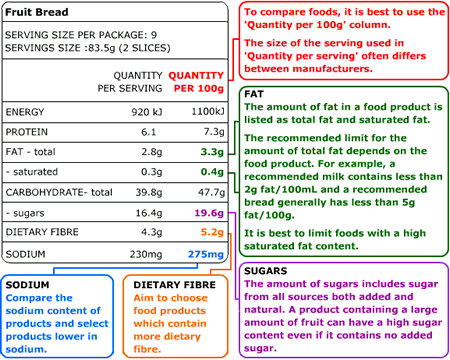
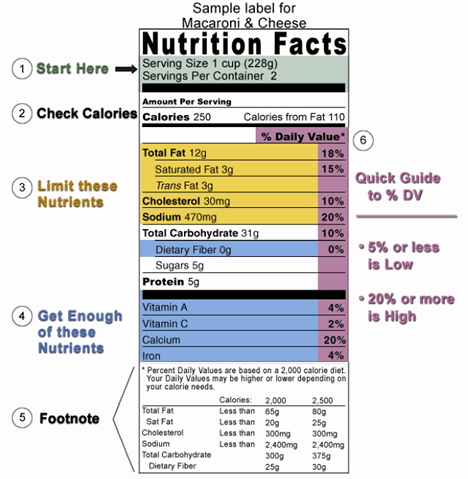
The Nutrition Information Panel shows the amount of key nutrients in the food. In Australia, it commonly includes energy, protein, total fat, saturated fat, carbohydrate, sugars and sodium.
For everyday comparisons, the “per 100g” or “per 100mL” column is often the most useful because it lets you compare similar products on the same basis.
Why can serving sizes be confusing?
The serving size listed on a package is set by the manufacturer and may not match the amount you actually eat. Two similar products can also use different serving sizes.
Use the “per serve” column when you want to estimate what you will consume in one eating occasion, but use “per 100g” when comparing products.
How should you compare saturated fat?
Saturated fat is listed separately from total fat. When comparing similar foods, a lower saturated fat value per 100g can be useful, particularly if the product is something you eat regularly.
Total fat is not automatically a negative. Foods such as nuts, seeds, avocado and olive oil can be relatively high in fat while still fitting well within a healthy eating pattern.
What should you know about sugars on labels?
The “sugars” line on the Nutrition Information Panel includes both naturally occurring sugars and added sugars. For example, the sugars in plain milk or fruit contribute to the total even when no sugar has been added.
The ingredients list can help you work out whether sweeteners have been added. Common names include sugar, glucose, dextrose, sucrose, syrups, honey and fruit juice concentrates.
What does “no added sugar” mean?
“No added sugar” does not necessarily mean a food is low in sugar. It means sugars have not been added in certain forms, but the product may still contain naturally occurring sugars or ingredients that contribute substantial carbohydrate and sweetness.
Check both the ingredients list and the Nutrition Information Panel rather than relying on the claim alone.
How much sodium should you look for?
Sodium is the label value most useful for comparing salt content. Products such as sauces, processed meats, savoury snacks, instant meals and some breads can contribute significant sodium.
When comparing similar products, choose the option with less sodium per 100g where practical, especially if you eat the food frequently.
What about fibre?
Fibre is not always required to appear on the Nutrition Information Panel unless a claim is made, so its absence from the panel does not necessarily mean the product contains no fibre.
Wholegrains, legumes, vegetables, fruit, nuts and seeds are useful fibre-rich foods. If fibre is listed, compare similar products on a per 100g basis.
Is the Health Star Rating useful?
The Health Star Rating can be a quick comparison tool between similar packaged foods within the same broad category, but it should not replace reading the ingredients list and Nutrition Information Panel.
A rating is only one piece of information. It is still important to consider the overall food, how often you eat it and what the rest of your diet looks like.
Are “natural” and “organic” always healthier?
No. These words do not automatically tell you whether a product is nutritious. A food can be marketed as natural or organic and still be high in kilojoules, saturated fat, sodium or sugars.
Use the same label-reading approach regardless of the marketing language on the front of the package.
Frequently Asked Questions
Is the first ingredient always the main ingredient?
Generally, yes. Ingredients are listed in descending order by weight, so the first ingredient is usually present in the greatest amount.
Should I compare foods per serve or per 100g?
Use per 100g or per 100mL to compare similar products. Use per serve to estimate what you will actually consume.
Does “low fat” mean a product is healthy?
Not necessarily. A low-fat product can still be high in sugars, sodium or refined ingredients. Look at the whole label.
Does “no added sugar” mean sugar-free?
No. The product may still contain naturally occurring sugars or other carbohydrate-rich ingredients.
Is sodium the same as salt?
Sodium is one component of salt. Food labels usually list sodium, which is the best value to use when comparing products.
Do all packaged foods need a Nutrition Information Panel?
Many do, but there are exemptions for some foods and circumstances. The labelling requirements depend on the type of product and how it is sold.
Can ingredient lists change?
Yes. Manufacturers can reformulate products, so people with allergies, intolerances or specific dietary needs should recheck labels regularly.
About Mick Jordan
Mick Jordan is a naturopath and Sports and Remedial Massage Therapist based in Brighton, Melbourne, with more than 30 years’ experience in natural therapies. He has a particular interest in nutrition, digestive health, sports performance and recovery, and takes an individual approach to helping clients improve their health and wellbeing.
Disclaimer: This article provides general nutrition information and does not replace individual medical or dietary advice. If you have a food allergy, coeliac disease, diabetes or another condition requiring specific dietary management, seek advice from an appropriately qualified health professional.